Friday, January 26, 2007


Tuesday, January 23, 2007
Learn the Right lyrics
Two teachers are being treated to an extended stay in the "anticommunist investigation room" in the basement of the Seoul police station in Jangandong. See the Hankyoreh and KTU for details.
This is an old and tired story, but apparently the Right never bores of it. In 2004, the GNP - with help from the courts - blocked a bill that would have abolished the National Security Law. In 2005, the prosecutor's office charged a sociology professor under the law when the professor publicly attacked the reverend Douglas MacArthur. (He said that the good general was ... unbalanced, among other things. Any American historian would agree.)
When a government minister told prosecutors not to detain the academic, the prosecutors were incensed. How dare the government pretend to know which members of society were a threat to national security! There's a law against thought crimes, see, and we decide who breaks it. The head prosecutor submitted his resignation in protest. His resignation was duly accepted. And lo! there was much wailing and gnashing of teeth in the pages of that unholy triad, the Chosun, the Dong-A, and the JoongAng.
The professor was eventually convicted. He received a sentence (suspended) of two years in prison for his thought crime.
But what REALLY irks the Right is this "unification" nonsense. Not that many Uri party ministers are much interested in unification. But there is a Unification Ministry, whose bureaucrats are quite attached to the idea. And there is the Ministry of Education, with its Internet Peace School, which promotes understanding of the folks to the north. These initiatives are altogether distasteful to the Right, but there's not much they can do about this, not until the next general election.
But teachers are fair game, and the hunt has been on for some time. In 2006, police in Busan investigated a reunification teacher workshop there, but they found nothing titillating. Then a middle school in Junbuk province held a reunification event where teachers might have expressed too much sympathy for a communist partisan, but again prosecutors were disappointed by the temerity of the material. The unholy triad, however, howled throughout.
When a couple teachers uploaded images of posters to the union website in Seoul, the chorus returned to the stage. Of course, North Korean posters are available to teachers on Ministry of Education sites, and to the public at a Chosun Ilbo site. But the teachers who uploaded their posters had the audacity to identify and define sungun (i.e. military first) politics! This word is unfamiliar to most students and many teachers, of course, as folks here aren't in the habit of discussing policy/propaganda in the North. A definition might be useful to teachers who want to introduce a discussion in their classrooms.
Alas for these teachers, their definition of sungun politics was apparently not condescending enough. It's a question of tone, see? And theirs didn't harmonize well enough with the chorus.
Again, it's the Ministry of Education that is the desired target. The ministry suggests that teachers ask questions such as "What is sungun politics, and why does the North Korean government emphasize this?" and "What are the characteristics of North Korean politics?" Perhaps the detention of these teachers is a Ministry of Justice signal to its enemies in other ministries?
If teachers in the North ask similar questions about propaganda in the South, do the police come for them?
This is an old and tired story, but apparently the Right never bores of it. In 2004, the GNP - with help from the courts - blocked a bill that would have abolished the National Security Law. In 2005, the prosecutor's office charged a sociology professor under the law when the professor publicly attacked the reverend Douglas MacArthur. (He said that the good general was ... unbalanced, among other things. Any American historian would agree.)
When a government minister told prosecutors not to detain the academic, the prosecutors were incensed. How dare the government pretend to know which members of society were a threat to national security! There's a law against thought crimes, see, and we decide who breaks it. The head prosecutor submitted his resignation in protest. His resignation was duly accepted. And lo! there was much wailing and gnashing of teeth in the pages of that unholy triad, the Chosun, the Dong-A, and the JoongAng.
The professor was eventually convicted. He received a sentence (suspended) of two years in prison for his thought crime.
But what REALLY irks the Right is this "unification" nonsense. Not that many Uri party ministers are much interested in unification. But there is a Unification Ministry, whose bureaucrats are quite attached to the idea. And there is the Ministry of Education, with its Internet Peace School, which promotes understanding of the folks to the north. These initiatives are altogether distasteful to the Right, but there's not much they can do about this, not until the next general election.
But teachers are fair game, and the hunt has been on for some time. In 2006, police in Busan investigated a reunification teacher workshop there, but they found nothing titillating. Then a middle school in Junbuk province held a reunification event where teachers might have expressed too much sympathy for a communist partisan, but again prosecutors were disappointed by the temerity of the material. The unholy triad, however, howled throughout.
When a couple teachers uploaded images of posters to the union website in Seoul, the chorus returned to the stage. Of course, North Korean posters are available to teachers on Ministry of Education sites, and to the public at a Chosun Ilbo site. But the teachers who uploaded their posters had the audacity to identify and define sungun (i.e. military first) politics! This word is unfamiliar to most students and many teachers, of course, as folks here aren't in the habit of discussing policy/propaganda in the North. A definition might be useful to teachers who want to introduce a discussion in their classrooms.
Alas for these teachers, their definition of sungun politics was apparently not condescending enough. It's a question of tone, see? And theirs didn't harmonize well enough with the chorus.
Again, it's the Ministry of Education that is the desired target. The ministry suggests that teachers ask questions such as "What is sungun politics, and why does the North Korean government emphasize this?" and "What are the characteristics of North Korean politics?" Perhaps the detention of these teachers is a Ministry of Justice signal to its enemies in other ministries?
If teachers in the North ask similar questions about propaganda in the South, do the police come for them?
Friday, January 19, 2007
You mean we have the right to withhold labor???
S.K. students recieve poor education on labor issues
The ministry's response: "We have included five sentences. It is unreasonable to include more. The primary purpose of an education is to prepare human resources to accept that salary level indicates worth of social contribution."
For those few english teachers interested in introducing learners to labor issues, I have designed a few lessons. Contact me.
The ministry's response: "We have included five sentences. It is unreasonable to include more. The primary purpose of an education is to prepare human resources to accept that salary level indicates worth of social contribution."
For those few english teachers interested in introducing learners to labor issues, I have designed a few lessons. Contact me.
Friday, January 12, 2007
We don't talk about that

"The nationalist not only does not disapprove of atrocities committed by his own side, but he has a remarkable capacity for not even hearing about them." - George Orwell
After reading Pak Noja's observations about how, in Russia,
strongly nationalist/masculine/militaristic “anti-hegemonism” is largely destroying the ground for the real anti-imperialism/anti-capitalism - just like the way it happens with the NL (”national liberation”)-dominated Korean left todayI got to thinking about some of those topics that aren't included in the CSAT study manuals:
- the massacres of Vietnamese peasants by ROK forces
- political prisoners, imprisoned for 40 years
- WW2 crimes committed by Korean soldiers
- the widespread and calculated terror pursued by Rhee's regime, from 1948 and continuing into the civil war
- reference to the war as a civil war
- patriotism as something other than loyalty to the state
- a defence of the right to withhold labour
- the dangers lurking in "pure blood" mythologies
- feminist, race, queer theories of any kind
I'm working on it, the trick is to disguise the text as a conventional study manual, else students - and publishers - will have no use for it ...
Friday, January 05, 2007
Will the KTU respond? We can't if we're to stay "in the classroom" ...
UPDATE: After 3 months of beatings, the activists have been released.
* * *
Today, from Education International:
Urgent Action Appeal for Ethiopia
Torture of Ethiopian Teachers’ Association activists
Dear colleagues,
Education International calls on your solidarity to support the elected union officers of the Ethiopian Teachers’ Association (ETA). Currently, two ETA officers are reported to be subjected to torture while in detention without warrant. A third one is reported missing since December 15.
For years now, EI has been concerned by the actions taken by the Ethiopian authorities to dismantle the ETA, which has been representing the legitimate interests of the teaching profession in Ethiopia since 1949.
Since the creation of another Ethiopian Teachers' Association in 1993, the first ETA, a member of Education International, has been subjected to repression and interference seeking the destruction of the independent union.
The harassment was so intense in 2006 that EI and the ETA submitted complaints to the International Labour Organisation (Committee on Freedom of Association) and to the ILO/UNESCO Committee of Experts on the Application of the Recommendations concerning Teaching Personnel (CEART). Fortunately, despite the harassment of ETA leaders and interferences in ETA affairs which hamper the day-to-day work of the union, the ETA continues to enjoy the support of teachers and gains new members every month.
With your help, EI aims to encourage the Government of Ethiopia to respect freedom of association and to stop immediately the ill treatment of our three colleagues. You will find attached a model protest letter which can be used by your organisation to express your concern about the continued harassment, and now torture, of ETA activists. More information about EI's action can be found on the EI website.
December 2006: Abduction and torture of ETA activists
On 14 December, the family of Tilahun Ayalew reported his arrest on his way from his school to his residence in Dangla. Government security agents took him to the police station of Bahir Dar, in the North of the country. He was later transferred to the Addis Ababa Criminal Investigation Bureau, known as Maekelawi. He is reported to have been "heavily tortured". On 1 January, Tilahun Ayalew was brought to the Lideta Borough Initial Court in Addis Ababa. "He was so heavily beaten that he could hardly walk on his own from the police van to the court room," reported the ETA General Secretary. The judge adjourned his case to 15 January to allow the police to undertake further investigation. Tilahun Ayalew, aged 49 and father of 7 children, teaches at a primary school in his city of Dangla. He is a prominent ETA activist and is Chair of the ETA Awi zone. Earlier in 2005, Tilahu! n Ayalew was among the 68 teachers arrested after the post election demonstrations in November 2005. No arrest warrant was ever produced and he was finally released on bail without explanation. Since 14 December, he has been detained incommunicado and was refused access to a lawyer and/or to medical assistance. His relatives and colleagues are unaware of any charge filed against him.
Meqcha Mengistu was reported missing on December 15, 2006. He had been under constant surveillance by government security agents following his participation in an ETA conference held on 8-9 December in Addis Ababa. His relatives know nothing about his whereabouts. Meqcha Mengistu, aged 38 and father of 4 children, teaches at a secondary school in Dejen, in the Eastern part of the country. He is chairperson of the ETA East Gojam Zonal Executive and is member of the ETA Committee for the implementation of the EI/ETA Education For All-HIV/AIDS programme (EFAIDS). Meqcha was arrested along with Tilahun Ayalew and 66 other teachers in November 2005.
Education International is also concerned about the fate of Anteneh Getnet, a male teacher aged 42. On 8 May 2006, Antenech Getenet was abducted and tortured by unidentified men. He almost died and will never be able to teach again. A prominent ETA activist, he was elected to the ETA Addis Ababa Regional Council in August 2006. Antenech Getnet was arrested on 29 December and detained incommunicado at the Maekelawi Investigation Bureau. He is reported to have been severely beaten again. On 1 January, he appeared before the court, together with Tilahun Ayalew. The court also adjourned his case to allow for further investigation by the police.
The ETA leadership knows these three men very well. Their only offence is that they are members of the Ethiopian Teachers' Association.
What can you do?
When informed about the tragic events, EI immediately addressed a protest letter to the Ethiopian Prime Minister; EI also approached the International Labour Organisation, the International Trade Union Confederation and Amnesty International to denounce the detention without warrant and acts of torture against trade union officials in the context of their legal trade union activities.
As a national teacher association, you can undertake the following action:
Protest to the Ethiopian authorities - a model letter can be found on our website (http://www.ei-ie.org/en/urgentactionappeal/show.php?id=6&country=ethiopia). The letters should be addressed to the Prime Minister of Ethiopia and to the local Ethiopian embassy. A copy of your letter should also be forwarded to EI for our records.
Contact the ETA to express your solidarity > Ethiopian Teachers' Association, Gemoraw Kassa, General Secretary, P.O. Box 1639, Addis Ababa, Ethiopia - Tel: +251-11-552.46.68 - Fax: +251-11-551.28.26. (Bear in mind that phone is not always safe and the fax is often disrupted. Email messages can be forwarded to EI which will forward them to the colleagues in Ethiopia).
Give visibility to the situation of teachers in Ethiopia in your magazine, on your website, during meetings and via other appropriate means.
Approach your embassy representatives in Ethiopia. This step requires some care and concerted action. EI therefore invites you to be in touch before acting upon this recommendation.
EI will of course keep you updated on all development or when the Urgent Action Appeal is closed. For additional information or to discuss possible action, contact the EI Human and Trade Union Rights Coordinator dominique.marlet@ei-ie.org
I thank you in advance for your support of our Ethiopian colleagues.
Yours sincerely,
Fred van Leeuwen
General Secretary
update
I forgot to note that yes, the union did respond.
* * *
Today, from Education International:
Urgent Action Appeal for Ethiopia
Torture of Ethiopian Teachers’ Association activists
Dear colleagues,
Education International calls on your solidarity to support the elected union officers of the Ethiopian Teachers’ Association (ETA). Currently, two ETA officers are reported to be subjected to torture while in detention without warrant. A third one is reported missing since December 15.
For years now, EI has been concerned by the actions taken by the Ethiopian authorities to dismantle the ETA, which has been representing the legitimate interests of the teaching profession in Ethiopia since 1949.
Since the creation of another Ethiopian Teachers' Association in 1993, the first ETA, a member of Education International, has been subjected to repression and interference seeking the destruction of the independent union.
The harassment was so intense in 2006 that EI and the ETA submitted complaints to the International Labour Organisation (Committee on Freedom of Association) and to the ILO/UNESCO Committee of Experts on the Application of the Recommendations concerning Teaching Personnel (CEART). Fortunately, despite the harassment of ETA leaders and interferences in ETA affairs which hamper the day-to-day work of the union, the ETA continues to enjoy the support of teachers and gains new members every month.
With your help, EI aims to encourage the Government of Ethiopia to respect freedom of association and to stop immediately the ill treatment of our three colleagues. You will find attached a model protest letter which can be used by your organisation to express your concern about the continued harassment, and now torture, of ETA activists. More information about EI's action can be found on the EI website.
December 2006: Abduction and torture of ETA activists
On 14 December, the family of Tilahun Ayalew reported his arrest on his way from his school to his residence in Dangla. Government security agents took him to the police station of Bahir Dar, in the North of the country. He was later transferred to the Addis Ababa Criminal Investigation Bureau, known as Maekelawi. He is reported to have been "heavily tortured". On 1 January, Tilahun Ayalew was brought to the Lideta Borough Initial Court in Addis Ababa. "He was so heavily beaten that he could hardly walk on his own from the police van to the court room," reported the ETA General Secretary. The judge adjourned his case to 15 January to allow the police to undertake further investigation. Tilahun Ayalew, aged 49 and father of 7 children, teaches at a primary school in his city of Dangla. He is a prominent ETA activist and is Chair of the ETA Awi zone. Earlier in 2005, Tilahu! n Ayalew was among the 68 teachers arrested after the post election demonstrations in November 2005. No arrest warrant was ever produced and he was finally released on bail without explanation. Since 14 December, he has been detained incommunicado and was refused access to a lawyer and/or to medical assistance. His relatives and colleagues are unaware of any charge filed against him.
Meqcha Mengistu was reported missing on December 15, 2006. He had been under constant surveillance by government security agents following his participation in an ETA conference held on 8-9 December in Addis Ababa. His relatives know nothing about his whereabouts. Meqcha Mengistu, aged 38 and father of 4 children, teaches at a secondary school in Dejen, in the Eastern part of the country. He is chairperson of the ETA East Gojam Zonal Executive and is member of the ETA Committee for the implementation of the EI/ETA Education For All-HIV/AIDS programme (EFAIDS). Meqcha was arrested along with Tilahun Ayalew and 66 other teachers in November 2005.
Education International is also concerned about the fate of Anteneh Getnet, a male teacher aged 42. On 8 May 2006, Antenech Getenet was abducted and tortured by unidentified men. He almost died and will never be able to teach again. A prominent ETA activist, he was elected to the ETA Addis Ababa Regional Council in August 2006. Antenech Getnet was arrested on 29 December and detained incommunicado at the Maekelawi Investigation Bureau. He is reported to have been severely beaten again. On 1 January, he appeared before the court, together with Tilahun Ayalew. The court also adjourned his case to allow for further investigation by the police.
The ETA leadership knows these three men very well. Their only offence is that they are members of the Ethiopian Teachers' Association.
What can you do?
When informed about the tragic events, EI immediately addressed a protest letter to the Ethiopian Prime Minister; EI also approached the International Labour Organisation, the International Trade Union Confederation and Amnesty International to denounce the detention without warrant and acts of torture against trade union officials in the context of their legal trade union activities.
As a national teacher association, you can undertake the following action:
Protest to the Ethiopian authorities - a model letter can be found on our website (http://www.ei-ie.org/en/urgentactionappeal/show.php?id=6&country=ethiopia). The letters should be addressed to the Prime Minister of Ethiopia and to the local Ethiopian embassy. A copy of your letter should also be forwarded to EI for our records.
Contact the ETA to express your solidarity > Ethiopian Teachers' Association, Gemoraw Kassa, General Secretary, P.O. Box 1639, Addis Ababa, Ethiopia - Tel: +251-11-552.46.68 - Fax: +251-11-551.28.26. (Bear in mind that phone is not always safe and the fax is often disrupted. Email messages can be forwarded to EI which will forward them to the colleagues in Ethiopia).
Give visibility to the situation of teachers in Ethiopia in your magazine, on your website, during meetings and via other appropriate means.
Approach your embassy representatives in Ethiopia. This step requires some care and concerted action. EI therefore invites you to be in touch before acting upon this recommendation.
EI will of course keep you updated on all development or when the Urgent Action Appeal is closed. For additional information or to discuss possible action, contact the EI Human and Trade Union Rights Coordinator dominique.marlet@ei-ie.org
I thank you in advance for your support of our Ethiopian colleagues.
Yours sincerely,
Fred van Leeuwen
General Secretary
update
I forgot to note that yes, the union did respond.
Friday, December 29, 2006
Enslaved in Incheon

SHIT LIKE THIS is why both UNESCO and the ILO recommended, back in 1966, that teacher organizations have the same rights as other labour organizations.
Incidentally, the KFTA missed that particular recommendation in their recent report to the CEART. Not that it matters much: I'd wager half a limb that no one in either the ministry of education or the national KTU executive has even read the recommendations.
Ah well, at least the KFTA is aware that folks beyond the peninsula might occasionally have something to offer teachers. This, and their posh resort beside Bomun Lake, justifies their knee-scuffed existence.
Sunday, December 24, 2006
No defense like a good offense
Our new president, Jeong Jin Hwa, won support for her pledge to focus on the principles of chamgyoyook, or as the Hankyoreh put it, go "back to the classrooms."
I wasn't aware that we had left the classrooms. It's disheartening to watch: the union has been forced to use the rhetoric of its opponents to define itself, its methods and goals.
Members I spoke with hope that she will establish a rapport with "the public." It may be that members hope she can placate the media before an extremist moves into Cheong Wa Dae. And who knows, editors might call off their attack dogs if the national exec prostrates itself before them.
But as I've said before, a union that fails to spend a single won on advertising is entirely at the mercy of the red-baiters. It's past time for a very public and continuing campaign. Subway cars, billboards, radio, newspapers, websites, TV. Beg borrow or steal the money to hire a marketing agency to see it through. I'd recommend nothing (overtly) ideological: simple shit like "If you can read this, thank a teacher" and "We are committed to your child's learning." Yes, columnists will make snide remarks, it won't much matter.
The strategy, I think, should be to associate teachers with learning. (This may sound absurd to readers outside Korea but trust me, when a parent hears the words "education" or "school," the last thing that comes to mind is a teacher.) Members will return, new ones will join, and the sanctimonious invectives of our opponents will be less effective. Then we might have more space and, eventually, more resources to pursue chamgyoyook.
Whither the money for this campaign? Kill the weekly newspapers. Encourage members to use all those great sites the union has developed, and save the trees.
I wasn't aware that we had left the classrooms. It's disheartening to watch: the union has been forced to use the rhetoric of its opponents to define itself, its methods and goals.
Members I spoke with hope that she will establish a rapport with "the public." It may be that members hope she can placate the media before an extremist moves into Cheong Wa Dae. And who knows, editors might call off their attack dogs if the national exec prostrates itself before them.
But as I've said before, a union that fails to spend a single won on advertising is entirely at the mercy of the red-baiters. It's past time for a very public and continuing campaign. Subway cars, billboards, radio, newspapers, websites, TV. Beg borrow or steal the money to hire a marketing agency to see it through. I'd recommend nothing (overtly) ideological: simple shit like "If you can read this, thank a teacher" and "We are committed to your child's learning." Yes, columnists will make snide remarks, it won't much matter.
The strategy, I think, should be to associate teachers with learning. (This may sound absurd to readers outside Korea but trust me, when a parent hears the words "education" or "school," the last thing that comes to mind is a teacher.) Members will return, new ones will join, and the sanctimonious invectives of our opponents will be less effective. Then we might have more space and, eventually, more resources to pursue chamgyoyook.
Whither the money for this campaign? Kill the weekly newspapers. Encourage members to use all those great sites the union has developed, and save the trees.
Thursday, November 30, 2006
"The bills are expected to help narrow the gap on working conditions between regular and non-regular workers to a great extent"
The vicious fucks did it.
Non-regular workers, estimated at 8.5 million, account for almost half of the total workforce, the highest among OECD countries.
They receive no more than 60 percent of regular workers' wages doing roughly the same work, with no social security nets such as medical and unemployment insurance.
The sharp increase of contract workers, since the 1997-98 Asian financial crisis, is said to be the main culprit of economic polarization.
Sunday, November 19, 2006
At least 270 Iraqi academics dead
Education Under Siege

Inter Press Service
Dahr Jamail and Ali Al-Fadhily
BAGHDAD, Nov 18 (IPS) - The recent kidnapping of scores of academics in Baghdad highlights the desperate situation of the educational system in occupied Iraq.
Armed men wearing Iraqi police uniforms abducted as many as 150 academics from the Ministry of Higher Education on Tuesday.
Alaa Makki, the head of the Parliament's education committee called the action a "national catastrophe" and the minister of higher education, Abed Dhiab al-Ujaili, announced that teaching in all of Baghdad's universities would be halted "until we find out what happened," and because "we are not ready to lose more professors."
While 70 of the academics have been released since then, others remain missing.
Academics, along with other professionals, have been increasingly targeted by sectarian violence which continues unchecked across much of Iraq. Thousands of professors and university researchers have long since fled the war-torn country.
An administration manager of a large university in Baghdad spoke with IPS on condition of anonymity: "Iraqi universities have turned into militia and death squad headquarters... Pictures of clerics and sectarian flags all over are not the only problem, but there is the interference of clerics and their followers in everything."
The university employee, who said he fears for his life each day he goes to work, explained that religious clerics now had the authority to "sack teachers and students, forbid certain texts, impose certain uniforms and even arrest and kill those who belong to other sects or those who object to their behaviour."
He angrily added, "Our government seems to approve all that, as no security office ever intervened to protect teachers and students or make any change to the situation."
Iraqi security forces have been accused of taking part in, or at least ignoring several mass kidnappings, which are widely believed to have been carried out by sectarian groups. The Sunni minority have blamed many of the kidnappings on armed groups from what are now the dominant Shi'ite political parties, who also control the Ministry of Interior.
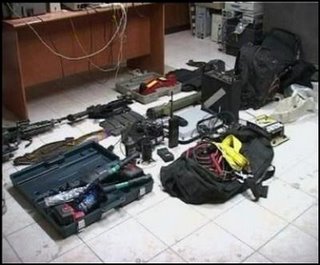
The higher education ministry is currently headed by a member of the main Sunni Arab political bloc.
The 2003 U.S.-led invasion and occupation of Iraq, with the broken promises of reconstruction and rehabilitation of Iraq's educational system, have not been the only cause of the current disaster.
UNESCO (United Nations Educational, Scientific and Cultural Organisation) had reported before the 1991 Gulf War that Iraq had one of the best educational performances in the region. Literacy rates were extremely high and primary school enrollment was 100 percent.
The number of schools in Iraq under the Saddam Hussein regime (1979-2003) increased due to the compulsory learning law enacted in the 1970s. A huge campaign for the eradication of illiteracy was organised and people had to send their children to school to avoid legal repercussions.
The Ba'ath party had influence on the kind of subjects studied concerning religion. In addition, education administrators and teachers preferred to join the ruling party, mostly for job security, but they still had to be scientifically qualified as teachers.
Being members of the Ba'ath party when the U.S.-led occupation began, particularly when CPA (Coalition Provisional Authority) Administrator Paul Bremer instituted the "de-Ba'athification" plan, caused most teachers and administrators to be fired, arrested or later to be assassinated by death squads and replaced by others who were selected by new ruling parties, which tended to be Shi'ite religious fundamentalists.
These factors, on top of the harsh economic sanctions and the current occupation, have left Iraq's education system in shambles.
"The newly employed teachers are either selected for being members of Islamic parties in power or those who paid bribes in order to get the job," a chief education supervisor in Baghdad told IPS, speaking on condition of anonymity.
He has managed to keep his job since he had never joined the Ba'ath Party, and added that other problems had arisen because, "Some of them [teachers] are too old to teach and others brought fraudulent graduation certificates that we could not deny because they were sent to us by parties who have militias."
Billions of dollars were supposedly spent for rehabilitating schools that were severely bombed by U.S. war planes during the 2003 invasion. However, the quality of work by foreign contractors, such as Bechtel Corporation, and their subcontractors was so poor that thousands of schools across the country remain in a state of disrepair.
Most of the money was spent on repainting and supplying the schools with cheap equipment that has not stood for long.
"The money for rebuilding schools just vanished between the U.S.-appointed Iraqi Governing Council and the western contractors and so we still need a lot to be done," Abdel Aziz, an education manager told IPS, "We are doing our best to facilitate the educational operation, but we are facing a great deal of problems with the capacity of our schools and teachers."
Another problem in some areas is the misuse of school buildings. People in conflict-ridden areas like Ramadi and parts of Baghdad have complained that U.S. soldiers use school buildings as combat posts, especially for snipers.
Other schools are used by militias and death squads in areas of Baghdad and southern provinces of Iraq.
Today, security is perhaps the major problem facing the education system. Teachers and students find it too dangerous to move between their homes and schools under such a chaotic security situation. Further complicating matters, there is great fear of abduction for ransom and an even greater of for assassination by death squads.
And the poor state of Iraq's economy has exacerbated the situation.
"There is no possible way for me to cover school expenses," Omar Jassim told IPS. Father of four from Baghdad, Jassim said, "I am unemployed and life became too expensive, as well as the high school bus fare and clothes for the children. I had to cut them from school and make them help me provide food for the family."
Many families have decided not to send their children to school and have instead pushed them to work as cleaning boys or beggars in the streets.
Last month Iraq's Ministry of Education released statistics which indicated that only 30 percent of Iraq's 3.5 million students were attending classes. This is less than half the number from the previous year, which, according to the Britain-based non-governmental organisation Save the Children, was 75 percent attendance.
Attendance rates for the new school year which started on Sep. 20 were at a record low, according to the ministry.
According to the Ministry of Education, 2006 has been the worst year for school attendance since U.S.-led invasion in March 2003. The immediate pre-war level of attendance in 2003 was nearly 100 percent.
At least 270 academics have been killed during the occupation, according to the Iraq study group Brussels Tribunal.
Posted by Dahr_Jamail at November 18, 2006 04:56 PM
_______________________________________________
(c)2006 Dahr Jamail.
All images, photos, photography and text are protected by United States
and international copyright law. If you would like to reprint Dahr's
Dispatches on the web, you need to include this copyright notice and a
prominent link to the http://DahrJamailIraq.com website. Website by
photographer Jeff Pflueger's Photography Media http://jeffpflueger.com . Any
other use of images, photography, photos and text including, but not
limited to, reproduction, use on another website, copying and printing
requires the permission of Dahr Jamail. Of course, feel free to forward
Dahr's dispatches via email.
Inter Press Service
Dahr Jamail and Ali Al-Fadhily
BAGHDAD, Nov 18 (IPS) - The recent kidnapping of scores of academics in Baghdad highlights the desperate situation of the educational system in occupied Iraq.
Armed men wearing Iraqi police uniforms abducted as many as 150 academics from the Ministry of Higher Education on Tuesday.
Alaa Makki, the head of the Parliament's education committee called the action a "national catastrophe" and the minister of higher education, Abed Dhiab al-Ujaili, announced that teaching in all of Baghdad's universities would be halted "until we find out what happened," and because "we are not ready to lose more professors."
While 70 of the academics have been released since then, others remain missing.
Academics, along with other professionals, have been increasingly targeted by sectarian violence which continues unchecked across much of Iraq. Thousands of professors and university researchers have long since fled the war-torn country.
An administration manager of a large university in Baghdad spoke with IPS on condition of anonymity: "Iraqi universities have turned into militia and death squad headquarters... Pictures of clerics and sectarian flags all over are not the only problem, but there is the interference of clerics and their followers in everything."
The university employee, who said he fears for his life each day he goes to work, explained that religious clerics now had the authority to "sack teachers and students, forbid certain texts, impose certain uniforms and even arrest and kill those who belong to other sects or those who object to their behaviour."
He angrily added, "Our government seems to approve all that, as no security office ever intervened to protect teachers and students or make any change to the situation."
Iraqi security forces have been accused of taking part in, or at least ignoring several mass kidnappings, which are widely believed to have been carried out by sectarian groups. The Sunni minority have blamed many of the kidnappings on armed groups from what are now the dominant Shi'ite political parties, who also control the Ministry of Interior.
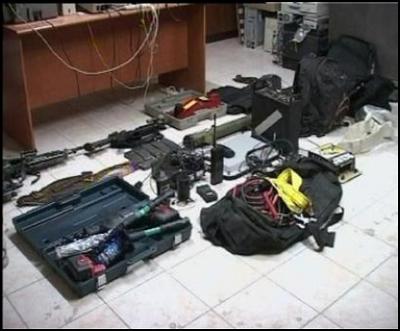
The higher education ministry is currently headed by a member of the main Sunni Arab political bloc.
The 2003 U.S.-led invasion and occupation of Iraq, with the broken promises of reconstruction and rehabilitation of Iraq's educational system, have not been the only cause of the current disaster.
UNESCO (United Nations Educational, Scientific and Cultural Organisation) had reported before the 1991 Gulf War that Iraq had one of the best educational performances in the region. Literacy rates were extremely high and primary school enrollment was 100 percent.
The number of schools in Iraq under the Saddam Hussein regime (1979-2003) increased due to the compulsory learning law enacted in the 1970s. A huge campaign for the eradication of illiteracy was organised and people had to send their children to school to avoid legal repercussions.
The Ba'ath party had influence on the kind of subjects studied concerning religion. In addition, education administrators and teachers preferred to join the ruling party, mostly for job security, but they still had to be scientifically qualified as teachers.
Being members of the Ba'ath party when the U.S.-led occupation began, particularly when CPA (Coalition Provisional Authority) Administrator Paul Bremer instituted the "de-Ba'athification" plan, caused most teachers and administrators to be fired, arrested or later to be assassinated by death squads and replaced by others who were selected by new ruling parties, which tended to be Shi'ite religious fundamentalists.
These factors, on top of the harsh economic sanctions and the current occupation, have left Iraq's education system in shambles.
"The newly employed teachers are either selected for being members of Islamic parties in power or those who paid bribes in order to get the job," a chief education supervisor in Baghdad told IPS, speaking on condition of anonymity.
He has managed to keep his job since he had never joined the Ba'ath Party, and added that other problems had arisen because, "Some of them [teachers] are too old to teach and others brought fraudulent graduation certificates that we could not deny because they were sent to us by parties who have militias."
Billions of dollars were supposedly spent for rehabilitating schools that were severely bombed by U.S. war planes during the 2003 invasion. However, the quality of work by foreign contractors, such as Bechtel Corporation, and their subcontractors was so poor that thousands of schools across the country remain in a state of disrepair.
Most of the money was spent on repainting and supplying the schools with cheap equipment that has not stood for long.
"The money for rebuilding schools just vanished between the U.S.-appointed Iraqi Governing Council and the western contractors and so we still need a lot to be done," Abdel Aziz, an education manager told IPS, "We are doing our best to facilitate the educational operation, but we are facing a great deal of problems with the capacity of our schools and teachers."
Another problem in some areas is the misuse of school buildings. People in conflict-ridden areas like Ramadi and parts of Baghdad have complained that U.S. soldiers use school buildings as combat posts, especially for snipers.
Other schools are used by militias and death squads in areas of Baghdad and southern provinces of Iraq.
Today, security is perhaps the major problem facing the education system. Teachers and students find it too dangerous to move between their homes and schools under such a chaotic security situation. Further complicating matters, there is great fear of abduction for ransom and an even greater of for assassination by death squads.
And the poor state of Iraq's economy has exacerbated the situation.
"There is no possible way for me to cover school expenses," Omar Jassim told IPS. Father of four from Baghdad, Jassim said, "I am unemployed and life became too expensive, as well as the high school bus fare and clothes for the children. I had to cut them from school and make them help me provide food for the family."
Many families have decided not to send their children to school and have instead pushed them to work as cleaning boys or beggars in the streets.
Last month Iraq's Ministry of Education released statistics which indicated that only 30 percent of Iraq's 3.5 million students were attending classes. This is less than half the number from the previous year, which, according to the Britain-based non-governmental organisation Save the Children, was 75 percent attendance.
Attendance rates for the new school year which started on Sep. 20 were at a record low, according to the ministry.
According to the Ministry of Education, 2006 has been the worst year for school attendance since U.S.-led invasion in March 2003. The immediate pre-war level of attendance in 2003 was nearly 100 percent.
At least 270 academics have been killed during the occupation, according to the Iraq study group Brussels Tribunal.
Posted by Dahr_Jamail at November 18, 2006 04:56 PM
_______________________________________________
(c)2006 Dahr Jamail.
All images, photos, photography and text are protected by United States
and international copyright law. If you would like to reprint Dahr's
Dispatches on the web, you need to include this copyright notice and a
prominent link to the http://DahrJamailIraq.com website. Website by
photographer Jeff Pflueger's Photography Media http://jeffpflueger.com . Any
other use of images, photography, photos and text including, but not
limited to, reproduction, use on another website, copying and printing
requires the permission of Dahr Jamail. Of course, feel free to forward
Dahr's dispatches via email.
Thursday, November 16, 2006
Teachers Sour Over English Training Plan
A little article in the Korea Times on the response of English teachers to the ministry's audacious plans.
Here is some context:
There are sound pedagogical approaches that require the use of L1 in language lessons. It's an invaluable teacher resource. Even input-obsessed Stephen Krashen suggests that 10% of teacher talk should be in L1.
Angel Lin in Hong Kong studied language classrooms with students from a disadvantaged socio-economic background, and argues very persuasively that teacher-led discourse can employ strategic use of L1:
Never mind that the spoken English of 95% of teachers is better than that of 95% of students.
Never mind that the all-powerful CSAT (which is being taken as I type) requires structural proficiency in English, and has nothing whatsoever to do with the ability to communicate in the language.
And never mind that students in many other countries (including China) learn English from a younger age, and devote up to twice the number of classroom hours to the language.
Professional development is always good, even if it's led by a bloated and backward government department. It would be far better if teachers themselves had access to resources sufficient to develop and facilitate such projects, as is the norm in other UNESCO member countries.
Many Korean English-language teachers are nervous about the planning of the nation's English education system as many of them would face forcible premature retirement unless they can conduct classes in English by 2015.Those lazy, selfish teachers, always with the griping and the gnashing of teeth.
Here is some context:
There are sound pedagogical approaches that require the use of L1 in language lessons. It's an invaluable teacher resource. Even input-obsessed Stephen Krashen suggests that 10% of teacher talk should be in L1.
Angel Lin in Hong Kong studied language classrooms with students from a disadvantaged socio-economic background, and argues very persuasively that teacher-led discourse can employ strategic use of L1:
what matters is not whether a teacher uses the L1 or the L2 but rather how a teacher uses either language to connect with students and help them transform their attitudes, dispositions, skills, and self-image - their habitus or social world (Lin, A. 1999. Doing-English-Lessons. TESOL Quarterly 33[3] pp. 393-412).Of course, teachers are again being scapegoated. Kids can't speak English because their teachers can't.
Never mind that the spoken English of 95% of teachers is better than that of 95% of students.
Never mind that the all-powerful CSAT (which is being taken as I type) requires structural proficiency in English, and has nothing whatsoever to do with the ability to communicate in the language.
And never mind that students in many other countries (including China) learn English from a younger age, and devote up to twice the number of classroom hours to the language.
Professional development is always good, even if it's led by a bloated and backward government department. It would be far better if teachers themselves had access to resources sufficient to develop and facilitate such projects, as is the norm in other UNESCO member countries.
Subscribe to:
Posts (Atom)
